
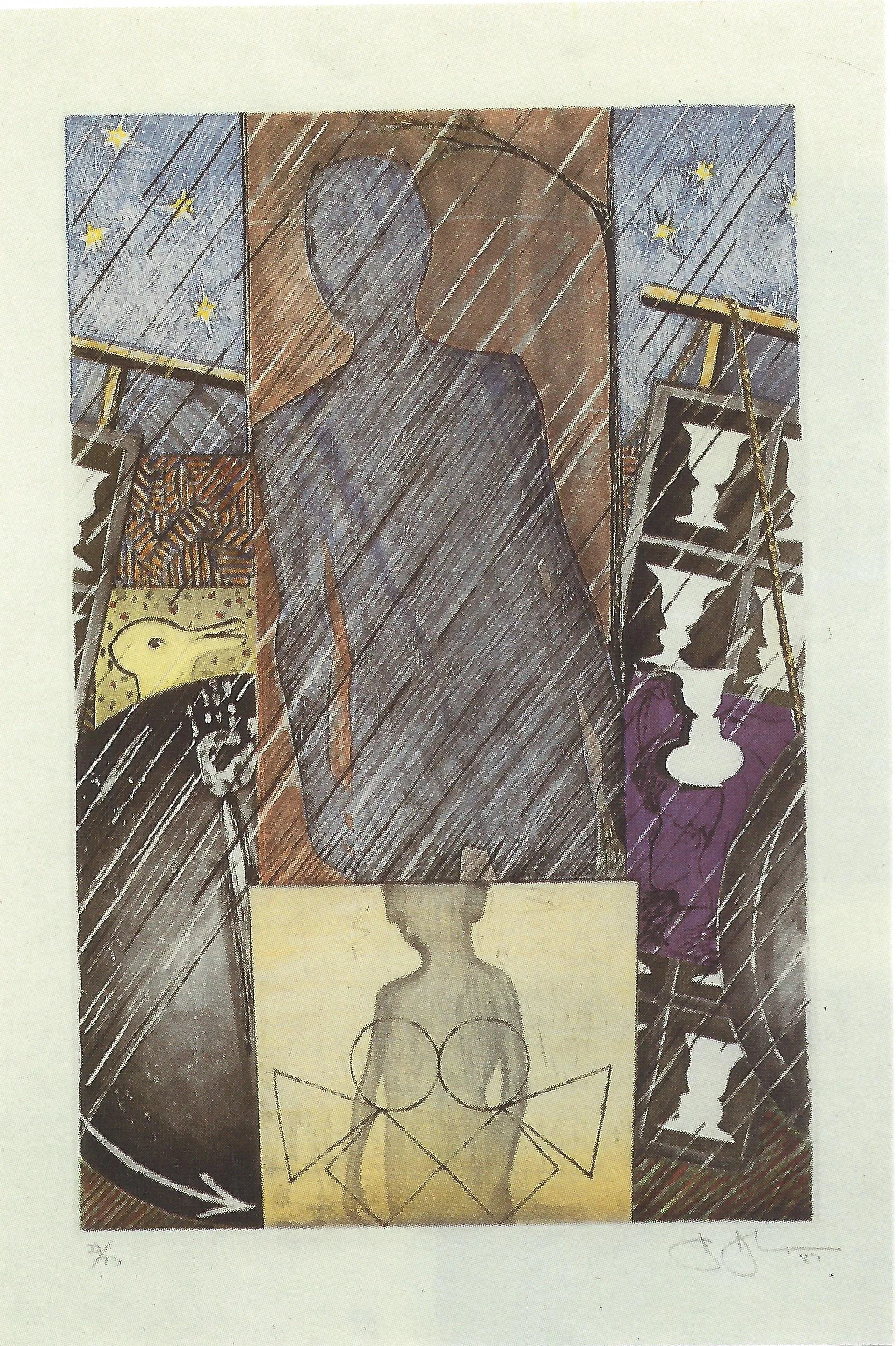
Jasper Johns: Seasons of Change
June 1, 2023 - April 27, 2024
“My experience with life is that it's very fragmented. In one place, certain kinds of things occur, and in another place, a different kind of thing occurs. I would like my work to have some vivid indication of those differences...”
- Jasper Johns
Jasper Johns created The Seasons during a time of great personal change. These four works, titled Summer, Fall, Winter, and Spring, are often viewed as a metaphor of the artist’s life. Works shown throughout the Powers Art Center exhibit, Seasons of Change, are fragments and symbols from this series. Curated by way of season, each flows from one to the next, depicting the fragility of the passage of time.
Notes from John Powers Archives on The Seasons Series.
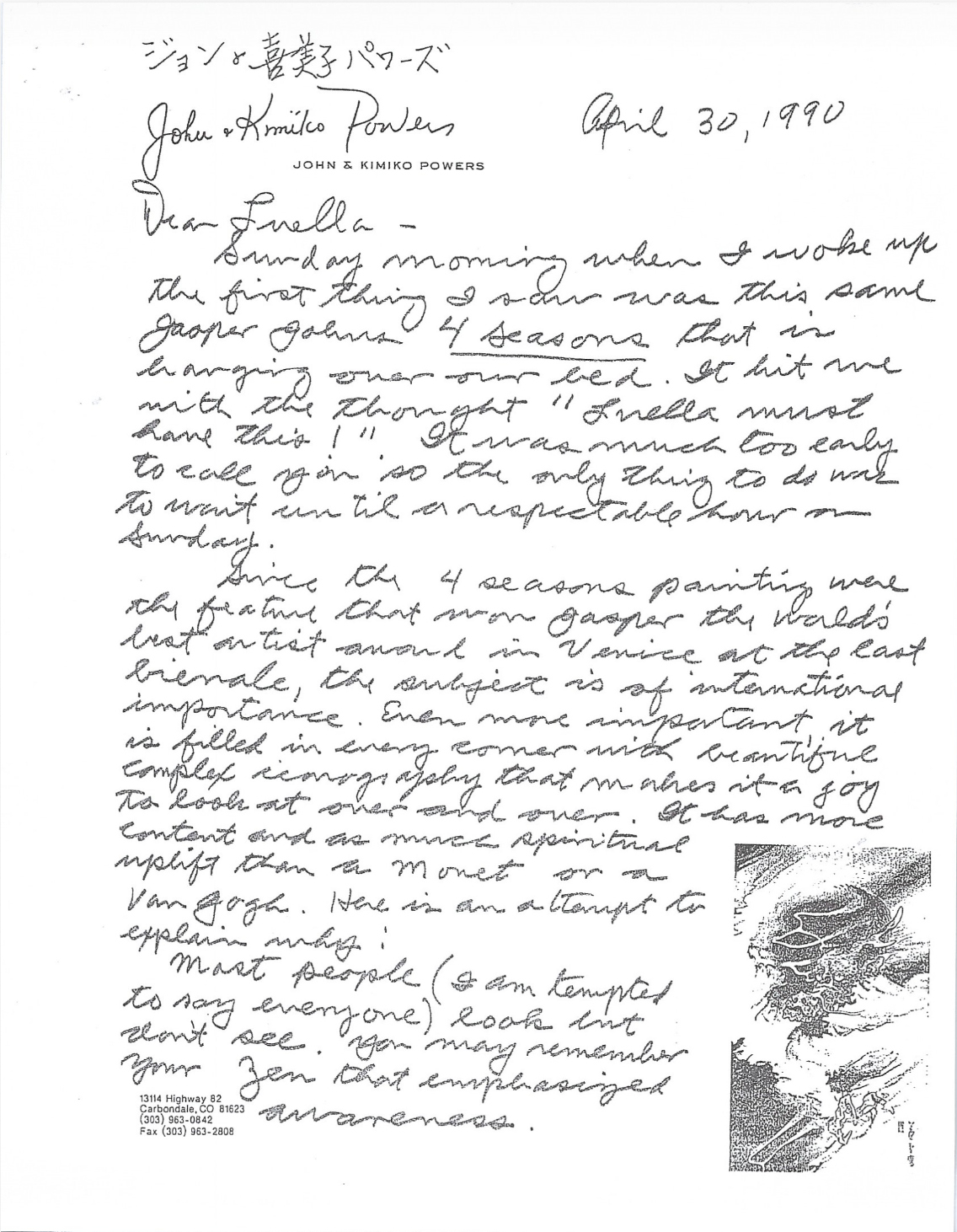
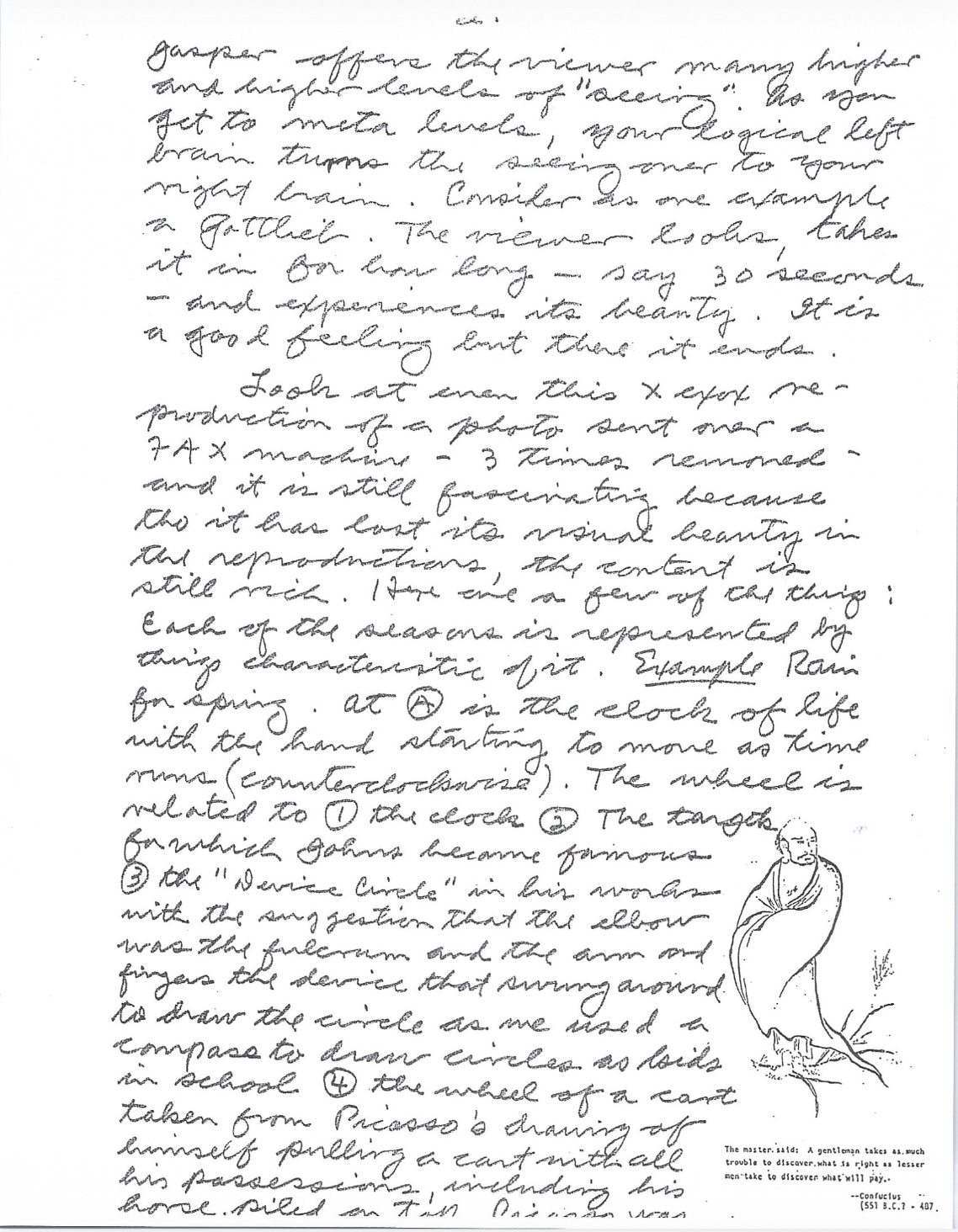
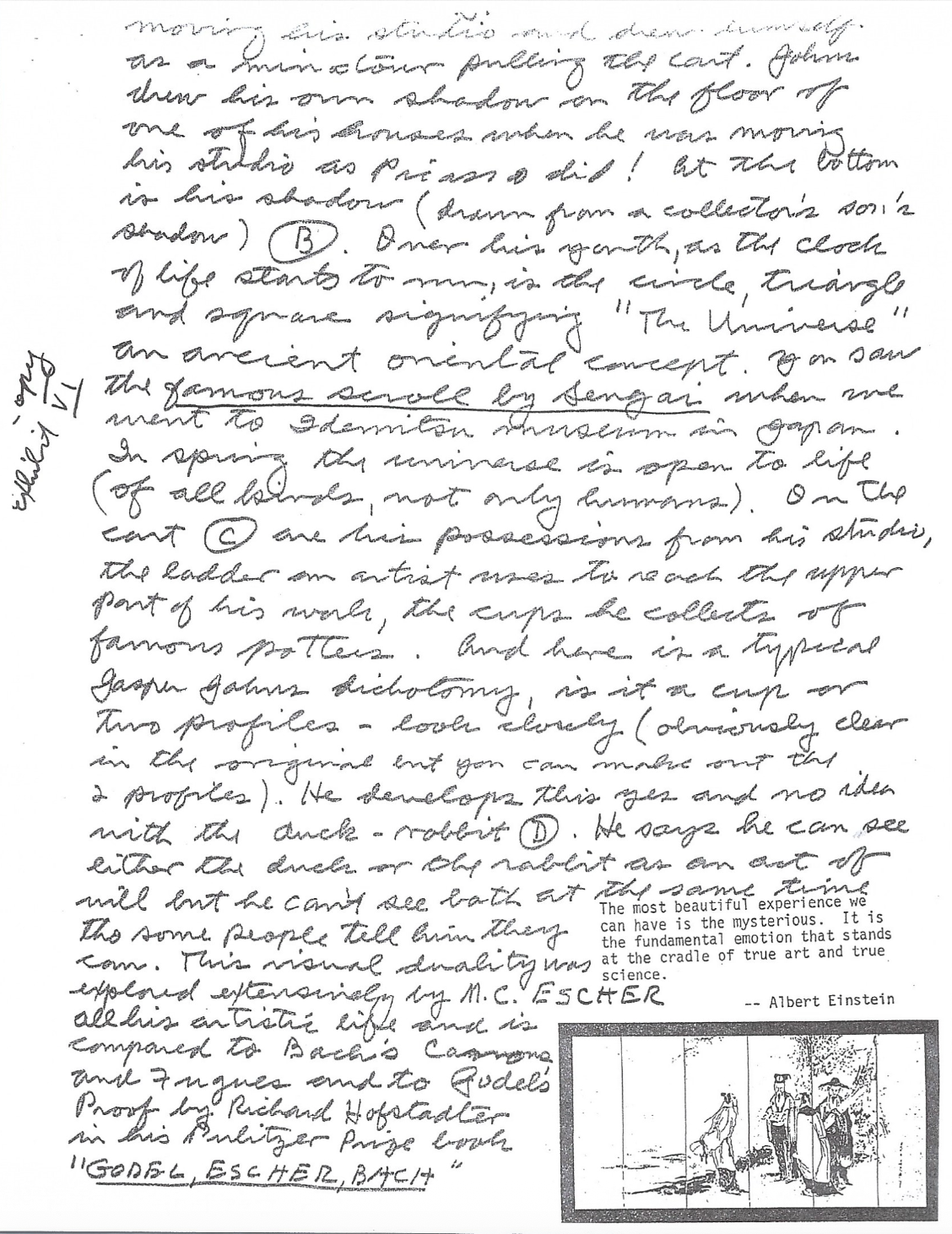
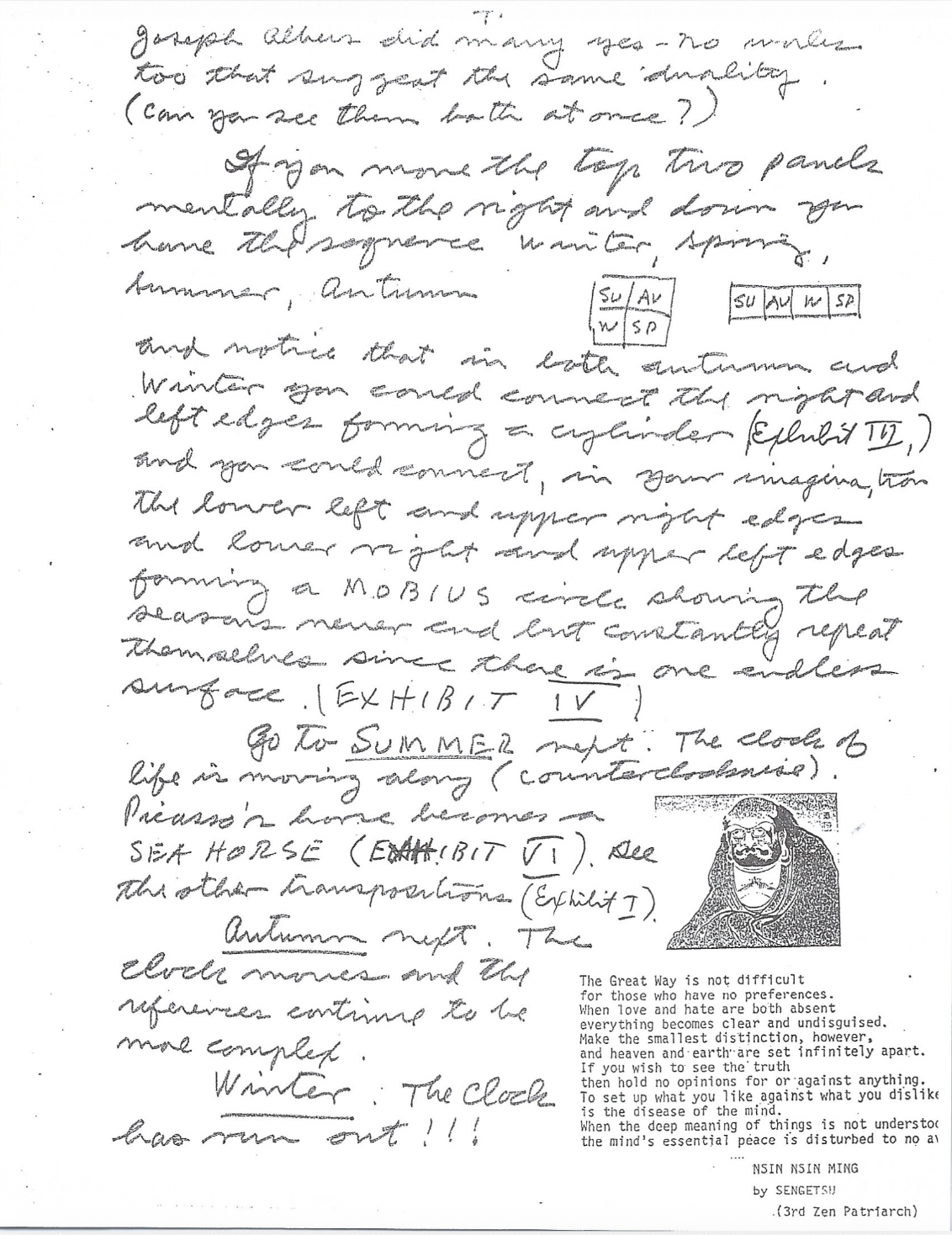
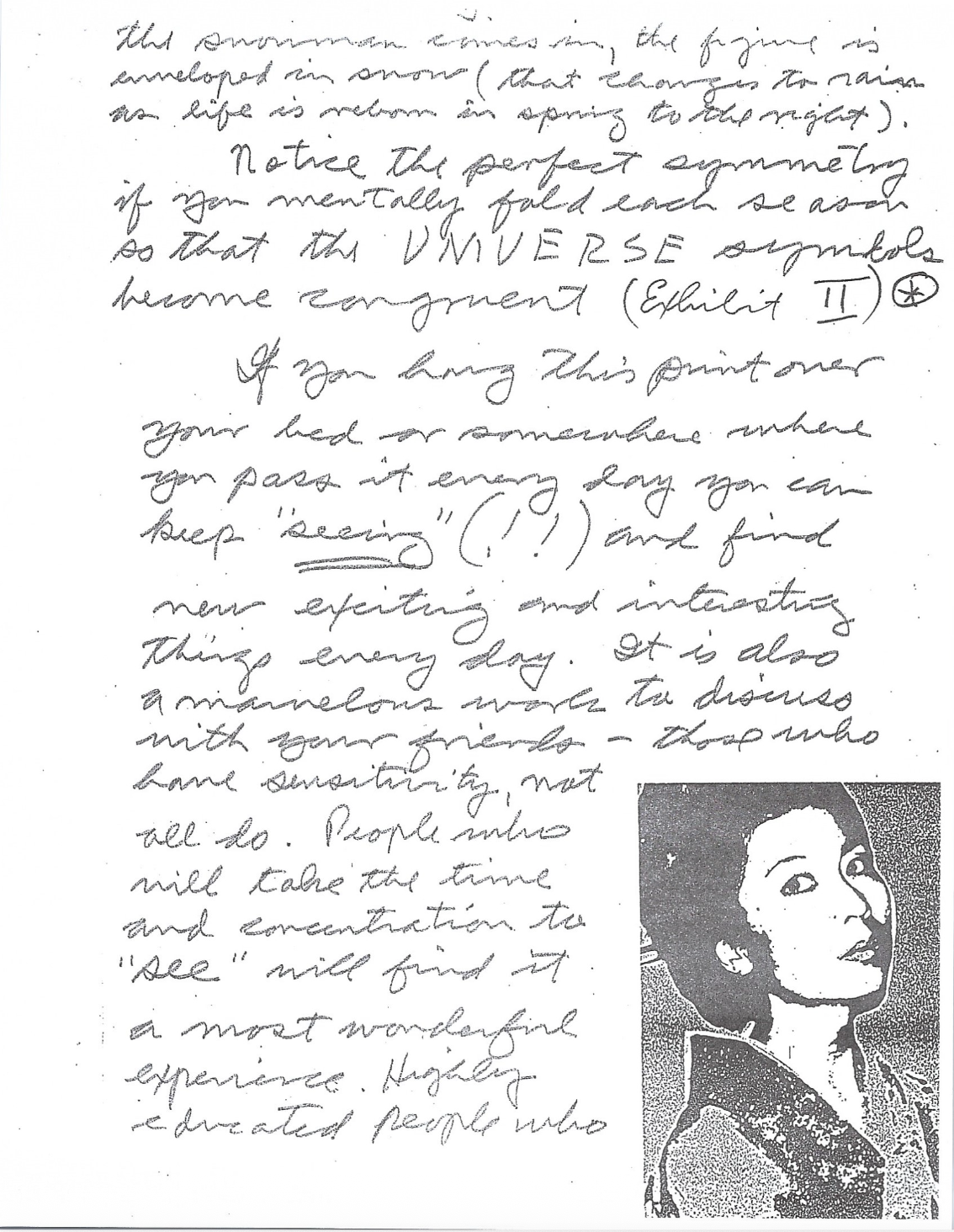
Transcription of notes above, beginning at the second paragraph
Since the four seasons paintings were the feature that won Jasper the World’s best artists award in Venice at the last Bienale (1990), the subject is of international importance. Even more important it is filled in every corner with beautiful complex iconography that makes it a joy to look at over and over. It has more content and as much spiritual uplift than a Monet or a Van Gogh. Here is an attempt to explain why:
Most people (I am tempted to say everyone) look but don’t see. You may remember your zen that emphasized awareness. Jasper offers the viewer many higher and higher levels of “seeing”. As you get to meta levels, your logical left brain turns the seeing over to your right brain. Consider as one example a Gottlieb. The viewer looks, takes it in for how long – say thirty seconds – and experiences its beauty. It is a good feeling but there it ends.
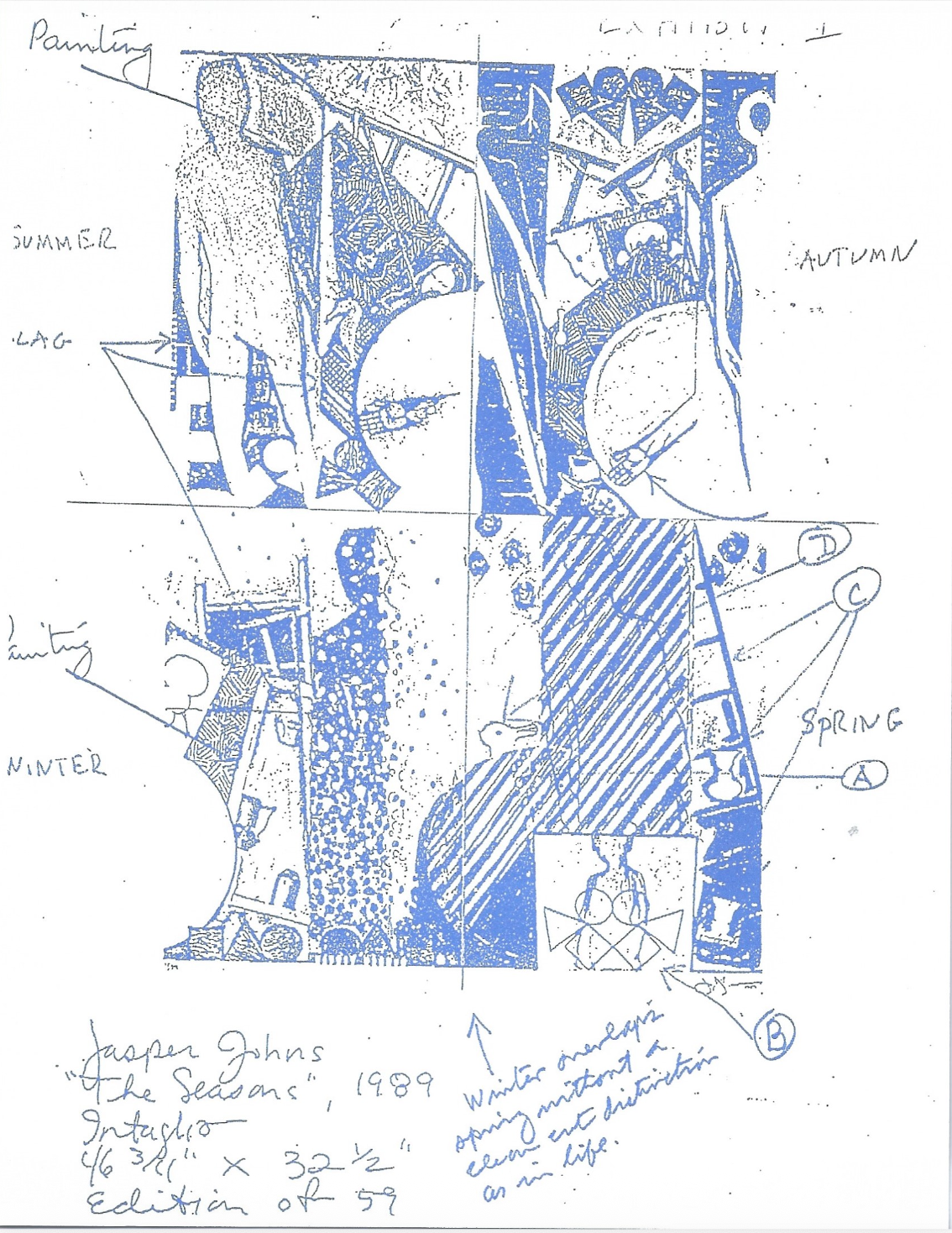
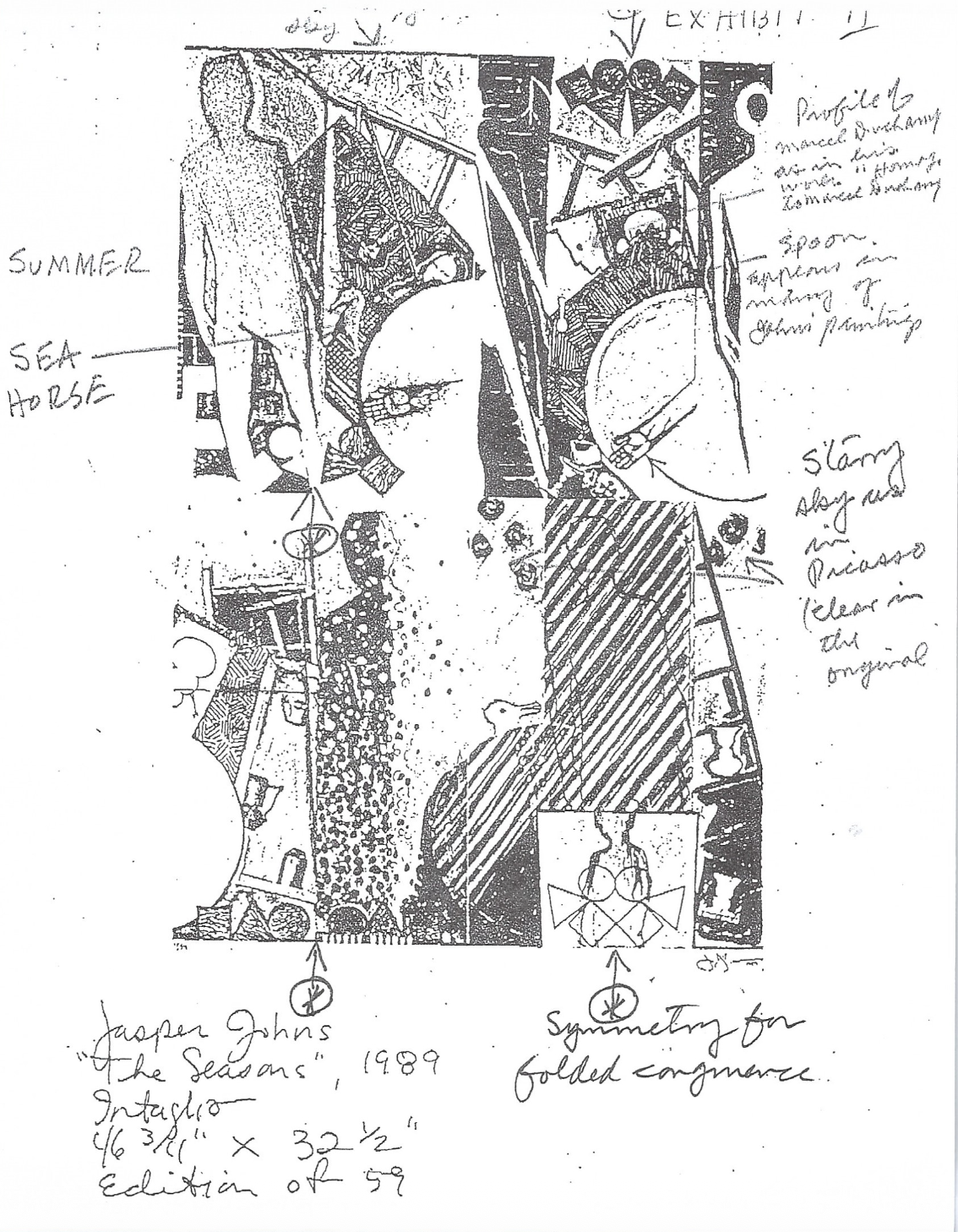
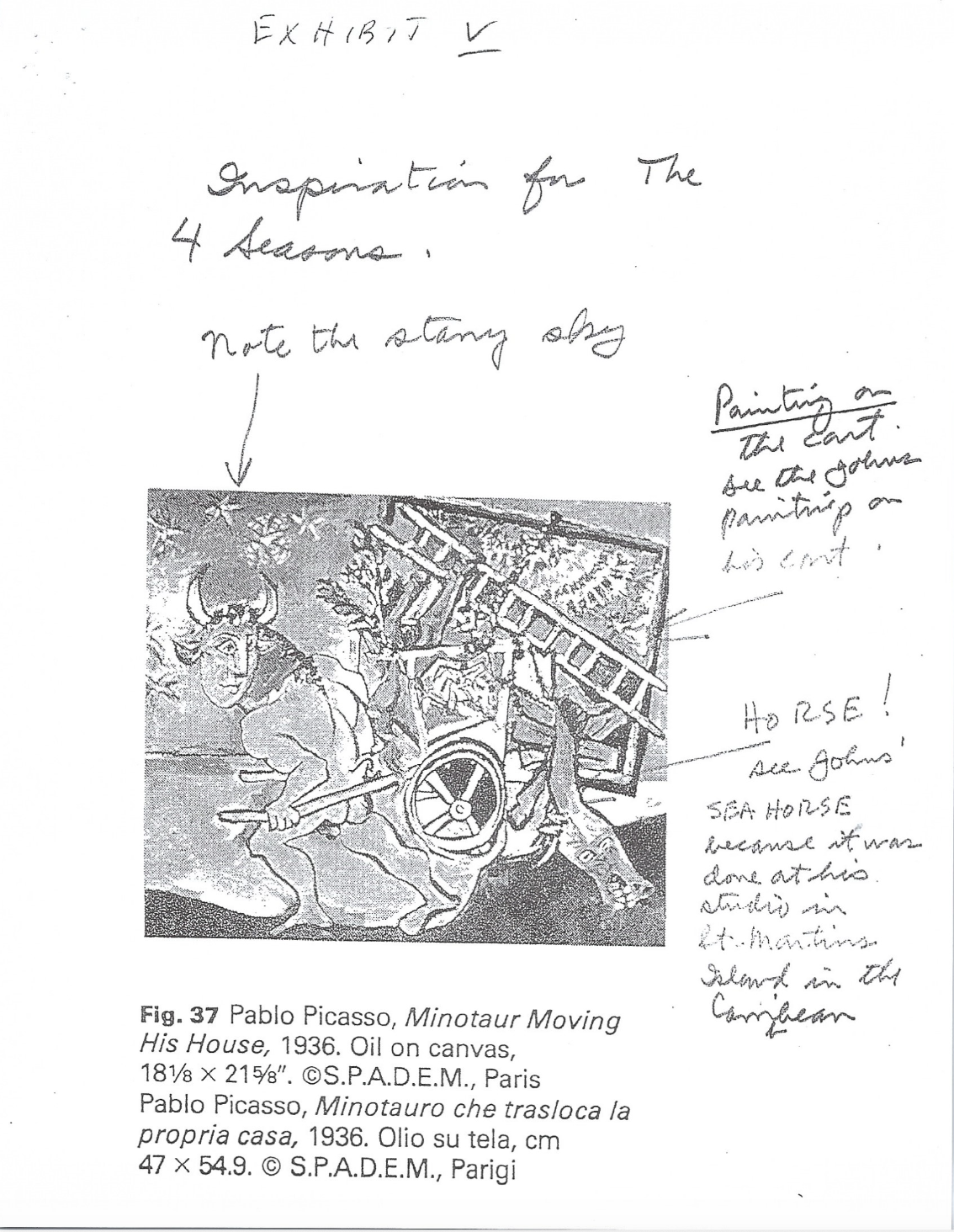
Look at even this xerox reproduction of a photo sent over a fax machine – 3 times removed – and it is still fascinating because though it has lost its visual beauty in the reproductions, the content is still rich. Here are a few of the things: Each of the Seasons is represented by things characteristic of it. Example: Rain for spring. At “A” is the clock of life with the hand starting to move as time runs (counterclockwise). The wheel is related to the (1) the clock (2) the targets for which Johns became famous (3) the “Device Circle” in his works with the suggestions that the elbow was the fulcrum and the arm and fingers the device that swung around to draw the circle as one used a compass to draw circles as kids in school (4) the wheel of a cart taken from Picasso’s drawing of himself pulling a cart with all his possessions, including his house, piled on top.
Picasso was moving his studio and drew himself as a minotour pulling the cart. John drew his own shadow on the floor of one of his houses when he was moving his studio as Picasso did! At the bottom is his shadow (drawn from a collector’s son’s shadow) “B” Over his youth, as the clock of life starts to run, is the circle, triangle, and square signifying “The Universe” and ancient oriental concept. You saw the famous scroll by Sengai when we went to Idemitsu Museum in Japan. In spring the universe is open to life (of all kinds, not only humans). On the cart (c) are his possessions from his studio, the ladder an artist’s uses to reach the upper part of his work, the cups he collects of famous potters. And here is a typical Jasper Johns dichotomy, is it a cups or two profiles – look closely (obviously clear in the original but you can make out the 2 profiles). He develops this yes and no idea with the duck – rabbit (d). He says he can see either the duck or the rabbit as an act of will, but he can’t see both at the same time. Though some people tell him they can. This visual duality was expanded extensively by M.C Escher all his artistic life and is compared to Bach’s cannons and fugues and to Godel’s Proof by Richard Hofstadter in his Pulitzer Prize book Godel, Escher, Bach.
Joseph Albers did many yes-no works too that suggest the same duality.
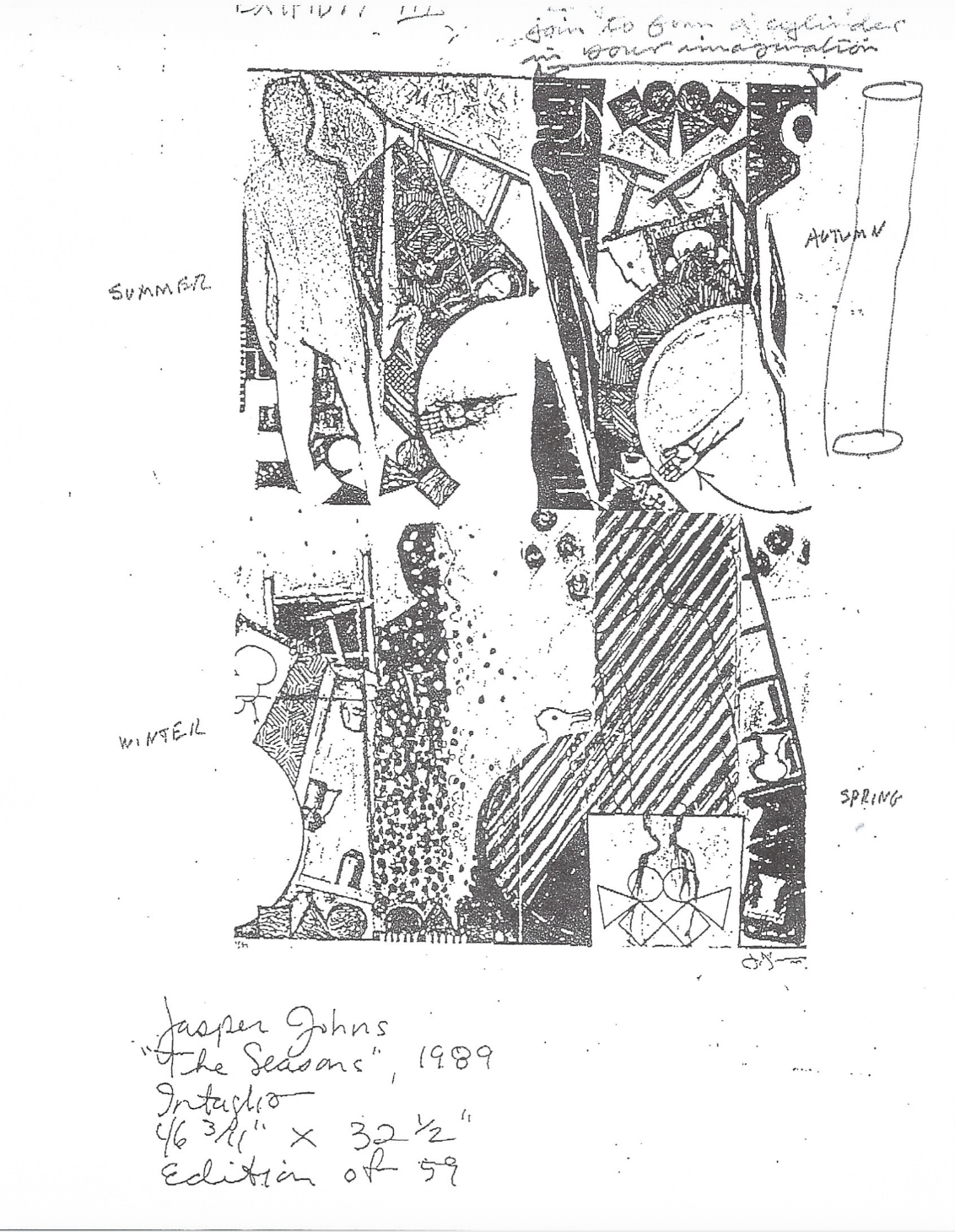
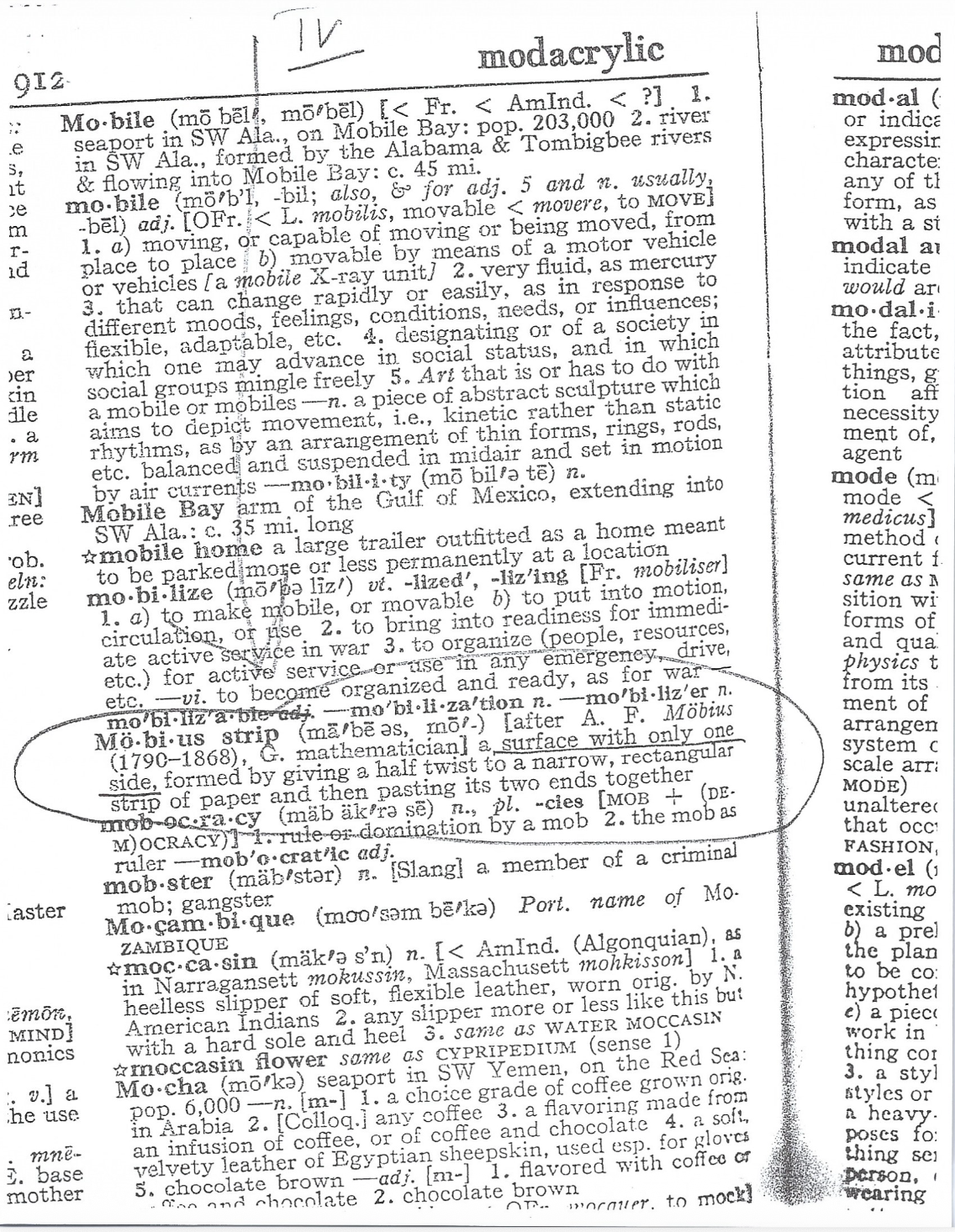
If you move the top two panels mentally to the right and down you have the sequence winter, spring, summer, autumn and notice that in both autumn and winter you could connect the right and left edges forming a cylinder (Exhibit III) and you could connect in your imagination the lower left and upper right edges and lower right and upper left edges forming a MOBIUS circle showing the seasons never end but constantly repeat themselves since there is one endless surface. (Exhibit IV).
Go to Summer next. The clock of life is moving along (counterclockwise). Picasso’s house becomes a sea horse (Exhibit VI). See the other transpositions (Exhibit I).
Autumn next. The clock moves and the references continue to be more complex.
Winter. The clock has run out!!! The snowman comes in, the figure is enveloped in snow (that changes to rain as life is reborn in spring to the right).
Notice the perfect symmetry if you mentally fold each season so that the UNIVERSE symbols become congruent (Exhibit II)
If you hang this print over your bed or somewhere where you pass it every day you can keep “seeing” (!!) and find new exciting and interesting things every day. It is also a marvelous work to discuss with your friends – those who have sensitivity, not all do. People who will take the time and concentration to “see” will find it a most wonderful experience. Highly educated people who come to our house often find looking at Jaspers art this way gives them a new awareness of the world around them. A lady stopped me last week who had attended a slide lecture I gave in Aspen and said how “exciting” and educational it was about art for her. She had the capacity (willingness) to see but had never taken the time it seems.
-
Jasper Johns (b. 1930)
Spring, 1987
© Jasper Johns / Licensed by VAGA at Artists Rights Society (ARS), New York